
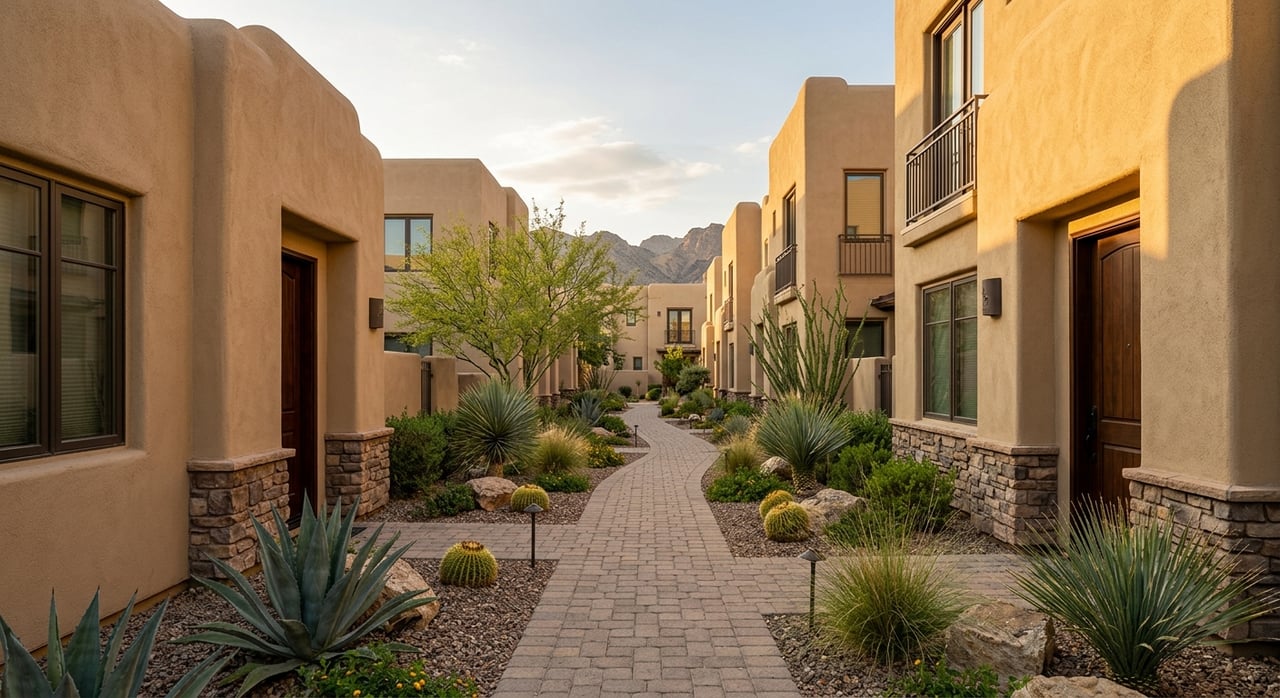
Buying a condo or townhome in Scottsdale can look simple on the surface, but the details that matter most are often hidden in the documents, dues, and financing rules. If you want lower-maintenance living, a seasonal home, or a more accessible price point than many single-family options, attached homes can be worth a close look. The key is knowing what you are actually buying, what it will really cost each month, and how the community rules may affect your plans. Let’s dive in.
Know What You’re Actually Buying
One of the biggest mistakes buyers make is assuming a condo and a townhome are completely different ownership types. In Scottsdale, the exterior style does not always tell you how the property is legally structured. A townhome can be part of a condominium or a planned community, depending on the recorded documents.
Under Arizona law for condominiums, units are separately owned while common elements are jointly owned. Arizona also treats planned communities differently, with mandatory association membership and assessments. That is why you should review the title report, declaration, bylaws, and CC&Rs before you assume a townhome means simpler ownership.
Budget Beyond the Mortgage
Monthly payment planning is especially important when you buy an attached home. Your mortgage is only part of the picture because condo and HOA dues are usually separate. Those dues can have a major effect on what the home actually costs you each month.
According to Fannie Mae’s condo buying guidance, dues can vary based on location, age, condition, and amenities, and they may cover items like exterior repairs, common-area maintenance, water, sewer, trash, and amenity upkeep. The CFPB guidance cited by Fannie Mae also notes that HOA fees can range from a few hundred dollars to more than $1,000 per month. Before you move forward, make sure you know exactly what is included and what is not.
Ask What the Dues Cover
Not all monthly dues work the same way. One community may include several utilities and exterior maintenance, while another may leave more costs in your hands. A higher fee is not automatically bad if it covers services or amenities you value.
You should ask for a clear breakdown of:
- Monthly association dues
- Any separate master-association dues
- Utility coverage
- Exterior maintenance responsibilities
- Amenity access
- Trash, water, and sewer coverage
- Any known or possible special assessments
Review the Resale Packet Carefully
In Arizona, the resale packet is one of the most important parts of condo or townhome due diligence. Under Arizona’s resale disclosure rules, the association or seller must provide key documents and financial information. This can include the bylaws, rules, declaration, assessment status, insurance and reserve information, current operating budget, most recent annual financial report, reserve study if there is one, and a summary of pending lawsuits.
That paperwork tells you a lot about the health of the community. It can reveal whether the association appears financially stable, whether repairs are being planned, and whether owners could face extra costs later. Arizona law also allows the association to charge up to $400 for resale or disclosure services, plus limited rush or update fees.
Red Flags to Watch For
When you review the resale packet, pay close attention to issues that could affect both your budget and your financing. Some problems are manageable, but they should never come as a surprise.
Look closely at:
- Reserve funding for future repairs
- Pending lawsuits
- Special assessments
- Insurance coverage details
- Delinquency or assessment issues
- Rental restrictions
- Parking rules
- Maintenance obligations
Fannie Mae specifically recommends asking about the remaining useful life of major components, project stability, pending litigation, renter friendliness, parking, and insurance. Those answers can shape whether a property is a great fit or a future headache.
Financing Can Be More Complex
A condo that looks perfect online can still be difficult to finance. That is one of the biggest differences between attached homes and many detached properties. Lenders often review not just your finances, but also the community itself.
HUD explains that FHA condominium financing depends on project approval or Single-Unit Approval. HUD and Fannie Mae both point to reviews of the project’s physical condition, insurance, financial condition, title structure, legal exposure, and owner-occupancy. In plain terms, a Scottsdale condo can be harder to buy if the project paperwork or reserves are weak, even when the unit is attractive and well maintained.
Why Pre-Checking the Project Matters
If you plan to use FHA or conventional financing, it is smart to ask about project eligibility early. That step can save you time, stress, and the disappointment of falling in love with a unit that turns into a financing problem. It is especially important if you are buying a seasonal property or considering future rental use.
Understand Scottsdale Price Points
Scottsdale attached homes cover a wide price range, which is one reason they appeal to different types of buyers. Some buyers are looking for a lower-maintenance primary home. Others want a lock-and-leave second home, a downsizing option, or a property with strong amenity value.
The City of Scottsdale’s 2025 Housing Needs Assessment reports that the 2024 median home value for townhomes in Scottsdale was $617,000. That same report lists all homes at $825,000 and single-family homes at $1,125,000. Those figures help explain why attached homes are often seen as a lower-entry-cost alternative in Scottsdale.
Pricing can still vary dramatically by location, age, finish level, and amenities. At the premium end, communities like Optima Camelview Village and Optima Kierland show how pricing can rise in highly amenitized properties with distinctive design and service offerings.
Match the Community to Your Lifestyle
The best condo or townhome for you is not just about square footage or finishes. It is also about how you want to live day to day. Scottsdale has attached-home options that feel urban, resort-focused, or more suburban depending on the area and community structure.
Old Town for Walkability
If you want an urban feel and easy access to shopping, dining, and entertainment, Old Town stands out. Optima Camelview’s amenities overview notes walkable access to Scottsdale Fashion Square and downtown Scottsdale destinations. For buyers who want lock-and-leave convenience near activity hubs, that type of location can be a strong fit.
Scottsdale Shadows for Amenities
If your priority is maintenance-light living with built-in amenities, Scottsdale Shadows is a useful example. Its official site describes a broad amenity package that includes a private 9-hole executive golf course, pool facilities, tennis courts, fitness centers, a library, business center, art studio, ceramics studio, and woodworking shop. In communities like this, higher dues may reflect a wider amenity offering.
McCormick Ranch for Convenience
If you prefer a more suburban feel without the upkeep of a detached home, McCormick Ranch is another example worth understanding. The McCormick Ranch Property Owners’ Association says the master community includes lakes, pathways, shopping centers, places of worship, resort hotels, a medical center, and a post office. That kind of broader community structure can appeal to buyers who want convenience and established surroundings.
Watch for Layered HOA Costs
Some Scottsdale communities have more than one association layer. That means you may have neighborhood dues plus master-association fees, transfer charges, or disclosure-related fees. If you do not ask early, those costs can catch you off guard.
For example, McCormick Ranch’s title and real estate information notes buyer transfer fees and seller disclosure fees, and it explains that the master association oversees the broader community while many subdivisions have active HOAs of their own. When you compare properties, make sure you ask whether there is a master association in addition to the local HOA.
Check Rental and Seasonal-Use Rules
If you may rent the property in the future, even occasionally, read the community rules early. Arizona law allows condo owners to use a unit as a rental unless the declaration prohibits it, and it limits what an association can require a landlord to disclose about tenants. But that does not mean every community is equally friendly to rentals or short-term stays.
Under Arizona law on condo rentals, the declaration plays a major role in what is allowed. Scottsdale also requires an annual city license for properties rented for less than 30 days, and the city notes that HOAs may still regulate or restrict short-term rentals even when they are otherwise allowed by right in residential districts. If you are buying for seasonal use or investment potential, community rules matter just as much as city rules.
A Smart Buying Checklist
Before you write an offer on a Scottsdale condo or townhome, make sure you have answers to the questions that matter most. A little extra due diligence now can help you avoid expensive surprises later.
Use this checklist as a starting point:
- Confirm whether the property is legally a condo or part of a planned community
- Review the title report, declaration, bylaws, and CC&Rs
- Calculate total monthly cost, including all dues
- Ask what the dues cover and what they do not cover
- Review the resale packet in detail
- Check for special assessments or pending litigation
- Verify insurance and reserve information
- Ask about parking and rental restrictions
- Confirm whether there is a master association
- Check financing eligibility early if using FHA or conventional financing
Buying the right attached home in Scottsdale is all about clarity. When you understand the ownership structure, dues, documents, financing, and community rules, you can make a decision with a lot more confidence.
If you want help comparing Scottsdale condo and townhome options, reviewing community details, or narrowing down the right fit for your goals, connect with Krzysztof Okolita. You will get responsive guidance, clear next steps, and local insight that helps you move quickly and smartly.
FAQs
What is the difference between a condo and a townhome in Scottsdale?
- A townhome describes the style of the home, while a condo or planned community describes the legal ownership structure, so you need to review the recorded documents to know what you are actually buying.
What do Scottsdale condo HOA fees usually cover?
- Fees may cover items like exterior maintenance, common-area upkeep, water, sewer, trash, and amenities, but coverage varies by community.
What is included in an Arizona condo resale packet?
- The resale packet may include the bylaws, rules, declaration, budget, financial reports, reserve information, insurance details, assessment status, and a summary of pending lawsuits.
Can Scottsdale condos be harder to finance than single-family homes?
- Yes, lenders may review the entire project’s insurance, reserves, financial condition, legal issues, owner-occupancy, and physical condition, not just your personal loan qualifications.
Are Scottsdale townhomes more affordable than single-family homes?
- Scottsdale attached homes are often a lower-entry-cost option, and the City of Scottsdale reported a 2024 median home value of $617,000 for townhomes compared with $1,125,000 for single-family homes.
Can you rent out a condo or townhome in Scottsdale?
- Possibly, but you need to check both the community declaration and local city rules, especially if you are considering short-term rentals under 30 days.
