
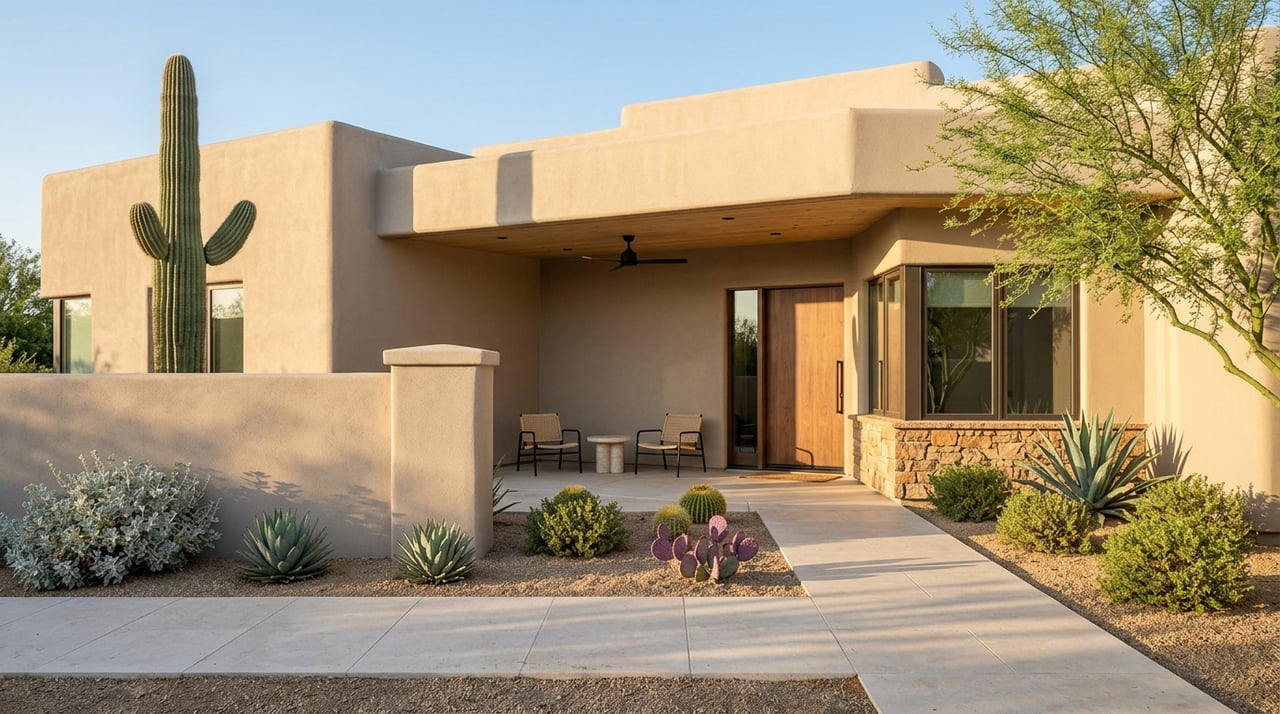
If you’re thinking about moving to Scottsdale, the first surprise is usually not just the sunshine. It’s how much daily life is shaped by the desert, the city’s size, and the very different feel from one area to the next. Before you choose a home or a neighborhood, it helps to know what new residents tend to notice right away. Let’s dive in.
The desert climate shapes your routine
One of the first things people notice about living in Scottsdale is that the weather affects how you plan your day. Scottsdale averages 314 sunny days per year and gets just 7.66 inches of rain annually, so the climate is a constant part of everyday life.
Summer is especially noticeable. NOAA climate normals for Scottsdale Municipal Airport show average highs of 102.0°F in June and 104.1°F in July, while January averages a much milder 66.5°F. That usually means early mornings and evenings become the most comfortable times for outdoor plans.
This rhythm is easy to see across the city. Scottsdale’s preserve guidance recommends visiting early in the day, bringing plenty of water, and planning around sunrise trailhead access. For many new residents, that quickly becomes normal rather than occasional.
Outdoor time is built into daily life
Scottsdale’s outdoor setting is not just scenic. It is a major part of how the city functions and feels from day to day. If you enjoy being active, you will likely notice that right away.
The city says the McDowell Sonoran Preserve is the largest urban wilderness area in the United States. Scottsdale also has more than 1,100 acres of open space, the 11-mile Indian Bend Wash Greenbelt, and 232 miles of nonmotorized trails. That gives residents a long list of options for walking, biking, and getting outside close to home.
Scottsdale also promotes itself as a bike-friendly city, with a gold-level Bicycle Friendly Community designation. Between multiuse paths, unpaved trails, and on-street bike lanes, some parts of the city offer more ways to get around than many newcomers expect.
Scottsdale feels different from north to south
Another thing new residents often notice quickly is that Scottsdale does not feel like one single, uniform city. It stretches 31 miles from north to south across 184.5 square miles, so your day-to-day experience can change quite a bit depending on where you live.
That matters when you’re house hunting. A home address in Scottsdale can come with a very different setting, pace, and routine depending on the area. For buyers, this is one of the most important practical takeaways.
Old Town feels compact and walkable
Old Town is the clearest example of Scottsdale’s urban side. The city defines this district around Chaparral Road, Earll Drive, 68th Street, and Miller Road, and describes it as pedestrian-friendly.
It is also packed with amenities. City materials note that Old Town includes more than 90 restaurants, 320 retail shops, and more than 80 art galleries. For new residents, it often feels more like a compact city center than a typical suburban commercial area.
If walkability is high on your list, this part of Scottsdale tends to stand out first. You can see the mix of dining, shopping, arts, and public gathering spaces in a very visible way.
Southern Scottsdale feels more established
Southern Scottsdale gives a different first impression. The city’s character area plan says this southernmost portion of Scottsdale lies south of Indian Bend Road and contained about 30% of the city’s population at the time of adoption.
The same plan notes that much of the housing stock and commercial space there are 30 or more years old. For newcomers, that often creates a more established, neighborhood-based feel compared with areas that read as newer or more resort-oriented.
North Scottsdale feels more desert-forward
While Scottsdale includes many distinct pockets, north Scottsdale is often associated with a stronger desert setting and easier access to preserve trails. That impression fits the city’s long north-south layout, the preserve’s trail network, and the contrast with Old Town’s compact core.
For many people moving from out of state, this is one of the biggest adjustments. Scottsdale can offer an urban, connected lifestyle in one area and a more open, trail-oriented lifestyle in another. The city’s appeal is real, but it is not one-size-fits-all.
Amenities are part of everyday living
New residents also tend to notice how visible Scottsdale’s dining, shopping, and arts scene is. These are not tucked away perks that you only discover later. In many parts of the city, they are part of what you see and use every week.
Old Town is one of the main hubs for that experience. The city describes its pedestrian-friendly streets as home to art galleries, museums, restaurants, retail shops, and nightlife, which helps explain why so many newcomers end up there early in their Scottsdale experience.
Arts and public spaces feel active
Scottsdale’s arts presence stands out because it is woven into public space. The Scottsdale Community Calendar lists ArtWalk every Thursday evening in Old Town’s Arts District, which gives residents a recurring event that is easy to build into a weekly routine.
Scottsdale Arts says the Civic Center campus brings together art, performance, architecture, and public space in a walkable setting. The area includes the LOVE sculpture, an outdoor amphitheater, fountains, a lagoon, museums, shops, restaurants, and Scottsdale Center for the Performing Arts.
Recurring events add to that sense of activity. Canal Convergence is a free annual outdoor public art event at the Scottsdale Waterfront with large-scale artworks, workshops, family activities, live music, and dance performances. For new residents, this often makes Scottsdale feel animated rather than static.
Shopping makes a strong first impression
Shopping is another part of Scottsdale’s identity that newcomers notice quickly. Scottsdale Fashion Square describes itself as the Southwest’s distinctive address for luxury shopping, dining, and entertainment.
That helps shape the city’s polished, amenity-rich image. Even if shopping is not your top priority, the concentration of retail and dining options can influence how convenient and connected an area feels.
Home choices are more practical here
For buyers, one of the biggest first lessons in Scottsdale is that lifestyle and housing decisions are closely tied together. The desert climate is beautiful, but it also changes what matters when you evaluate a home.
Features that may feel optional in other markets can matter a lot more here. Shade coverage, patio usability, pool upkeep, and strong air-conditioning performance tend to get more attention because they directly affect comfort in everyday life.
Landscaping and water use matter
Yards are one of the clearest examples. Scottsdale Water offers homeowners and HOAs water-conservation tools, rebates, outdoor efficiency checks, and access to WaterSmart, which shows how important water planning is in this market.
The city also notes that winter overseeding can require roughly 8,000 gallons per 1,000 square feet each season. That makes landscaping style and irrigation needs more than cosmetic decisions. They can affect your ongoing costs and maintenance routine.
For many new residents, this is a meaningful shift. A home’s outdoor space is still a major lifestyle feature, but low-water landscaping and practical design can be just as important as appearance.
Location changes the lifestyle
The other major takeaway is location. Because Scottsdale is so large, “living in Scottsdale” can mean very different things depending on where you land.
You might prefer a pedestrian-friendly address near Old Town, an established area in the south near the greenbelt, or a home closer to preserve access in the north. None of those choices is universally better. The right fit depends on how you want your daily life to look.
That is why local guidance matters when you start narrowing neighborhoods. In a city with this much variety, matching your routine to the right area can make a big difference in how Scottsdale feels once you move in.
If you’re planning a move to Scottsdale and want help comparing areas, home styles, and lifestyle fit, Krzysztof Okolita can help you move quickly and make a more informed decision.
FAQs
What do new residents notice first about Scottsdale weather?
- Most people notice the dry, sunny climate and the need to plan outdoor time early in the morning or later in the evening, especially in summer when average highs top 100°F.
What part of Scottsdale feels most walkable to new residents?
- Old Town usually stands out as the most walkable area because the city describes it as pedestrian-friendly and packed with restaurants, retail, galleries, and public spaces.
What does outdoor life in Scottsdale look like day to day?
- Outdoor life often includes morning walks, biking, trail use, and time at parks or the greenbelt, supported by the preserve, 232 miles of nonmotorized trails, and the 11-mile Indian Bend Wash Greenbelt.
What should homebuyers pay attention to in Scottsdale homes?
- Buyers often focus on air-conditioning performance, shade, patio usability, pool upkeep, and landscaping choices because the desert climate and water use affect daily comfort and ongoing maintenance.
Does Scottsdale feel urban or suburban to new residents?
- It can feel like both, depending on location, with Old Town offering a more compact and urban feel while other parts of the city feel more established, residential, or desert-oriented.
